

Geopolitical tensions hit London hotels as holidaymakers stay closer to home
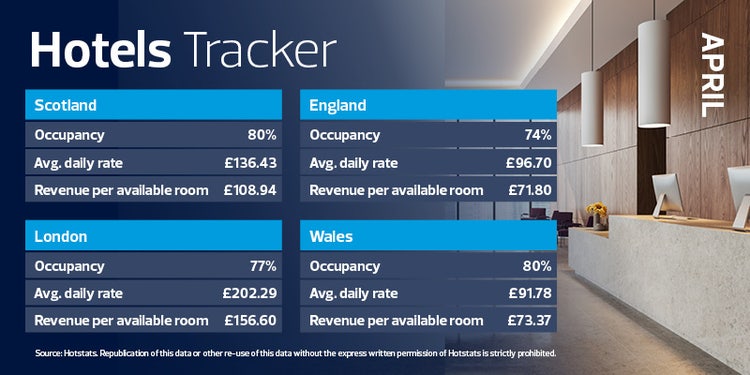
The UK hotel market managed to hold up in April despite geopolitical tensions, while London demand continued to take a hit, according to RSM UK Hotel Tracker.
The data, which is compiled and produced by Hotstats and analysed by RSM UK, shows occupancy of London hotels fell again from 78.9% to 77.4% in April year-on-year, but was up marginally from 75.7% to 76.2% in the UK.
Average daily rates (ADR) of occupied rooms in London rose slightly from £199.95 to £202.29 in April year-on-year, and increased from £137.77 to £140.24 in the UK. Revenue per available room (RevPAR) dipped from £157.68 to £156.60 in London but was up from £104.36 to £106.88 in the UK.
As a result, gross operating profits decreased in London from 34.1% to 32.5% in April year-on-year but were relatively flat in the UK at 29.6%.
Chris Tate, partner and head of hotels at RSM UK, said: “As nervousness around the Iran war drags on, so does the hit to London’s hotel market with some overseas tourists delaying or cancelling their trips to avoid potential travel disruptions. That said, demand in the rest of the UK appears to be holding up as domestic travellers that still want to get away opt for lower-risk options closer to home.
“Uncertainty stemming from the conflict in the Middle East, exacerbated by a rise in airfares, has clearly dented consumer confidence. In fact, nearly a third (31%) of UK consumers have changed their travel plans as a result, either by cancelling, postponing or changing destinations. In addition, over a quarter (27%) of consumers are not planning to take a holiday in the next 12 months, jumping from 19% before the Iran war hit.
“Looking ahead, the heatwave in May, particularly during half term, should have given the hotel market a welcome boost. Given current geopolitical tensions, consumers are favouring last minute bookings rather than planning in advance. So, provided the hot weather continues over the summer, UK staycations may be the preferred holiday option for many. While it’s encouraging to see an uplift in domestic demand, this alone is unlikely to offset the loss of overseas visitors.”
Thomas Pugh, chief economist at RSM UK, added: “It is now inevitable that 2026 will be a tougher year for consumer-facing firms. Fuel prices have already surged and Ofgem have confirmed that the energy price cap will jump 13% next month, which will push inflation back to 3.5%. At the same time, pay growth is slowing, especially in the private sector. The result is that real wages will stagnate in the latter half of this year.
“Consumer confidence has held up slightly better than we thought it would so far and households are entering the shock with a high savings ratio, which means there is scope to offset the hit to real incomes on spending by saving less. However, the longer the crisis goes on for, the more likely it is that consumers start paring back discretionary spending.
“Fortunately, we think that hotels will still hold up well during the crucial summer months. Inflation is unlikely to peak until Q4, and we estimate that it takes roughly nine months for a rise in jet fuel to materially push up airfares as most airlines hedge against oil prices and tickets are usually booked well in advance.”