

Christmas party season drives strong November for UK hotels
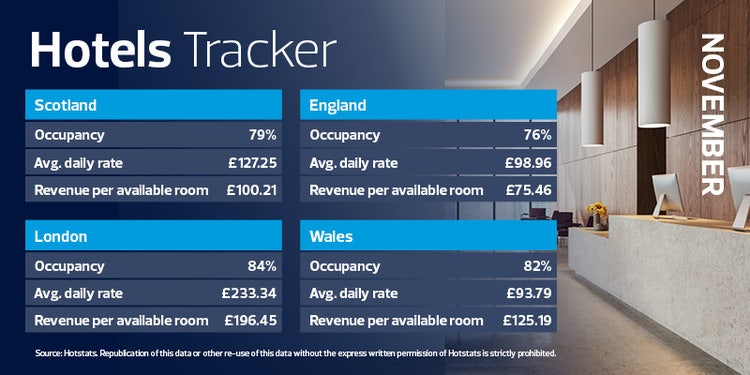
A surge in festive banqueting and Christmas celebrations drove the success of the hotel market in November, according to RSM UK.
The data, which is compiled and produced by Hotstats and analysed by RSM UK, shows banqueting and conferencing revenue (per square metre) jumped 11% year-on-year, from £149.60 to £165.32 in London. The rest of the UK also saw a 5% increase from £91.86 to £96.44.
Occupancy of London hotels rose from 83% to 84.1% in November year-on-year and increased from 79.5% to 79.7% in the UK.
Average daily rates (ADR) of occupied rooms in London also rose from £221.29 to £231.21 in November year-on-year and were up from £152.84 to £157.55 in the UK. Revenue per available room (RevPAR) followed this upward trend, climbing 6% in London from £183.73 to £194.50 and increasing 3% from £121.49 to £125.62 in the UK.
However, top line gains were largely offset by rising staff costs, with gross operating profits (GOP) of London hotels up slightly year-on-year from 42.3% to 42.6% in November. GOP of UK hotels remained flat at 36.9% in November.
Overall, consumer behaviour in 2025 reflected a decisive shift towards experiences. Travel and tourism emerged as the clear winner, with the RSM Hotels Tracker showing hotel occupancy rose from 75% in early 2024 to 78% by the end of 2025 as consumers traded up on travel.
Chris Tate, partner and head of hotels at RSM UK, said: “It was a good end to the year for the hotel sector. The significant increase in conferences and banqueting revenues suggest Christmas parties were back in full force at the end of 2025.
“However, despite these encouraging top line figures, very little is reaching the bottom line. The success of the industry is currently being hampered by sky-high staff costs. The increases in hotel room rates and number of rooms sold have only achieved marginal gains in profits.
"That said, even with all the uncertainty which has plagued much of 2025, travel remains one area that consumers don’t want to cut back on and that looks set to continue in 2026. In fact, the global travel market is expected to pick up pace, particularly among Chinese travellers, which the hotel industry should hugely benefit from.”
Thomas Pugh, chief economist at RSM UK, added: “A strong November in the hotels sector is reassuring given the relentless speculation in the lead up to the Autumn Budget. Indeed, strength in the hotels sector combined with the recovery at Jaguar Land Rover might be enough to prevent the economy from contracting for the third straight month in November, despite other firms putting plans on hold.
“Looking ahead, the outlook for domestic tourism is mixed. Real household disposable income growth will probably slow to around 0.5% in 2026, despite the slowdown in inflation, which will drag on consumption.
“However, the Bank of England will probably cut interest rates at least once more in 2026, and with the Autumn Budget behind us, we expect consumer confidence to pick up in the coming months. That should tempt households into saving a little less and spending a bit more despite weaker income growth.”