

Received a nudge letter from HMRC’s Campaigns and Projects teams?
Our team of specialist tax advisers are experienced in helping clients respond to letters received from HMRC’s Campaigns and Projects teams.
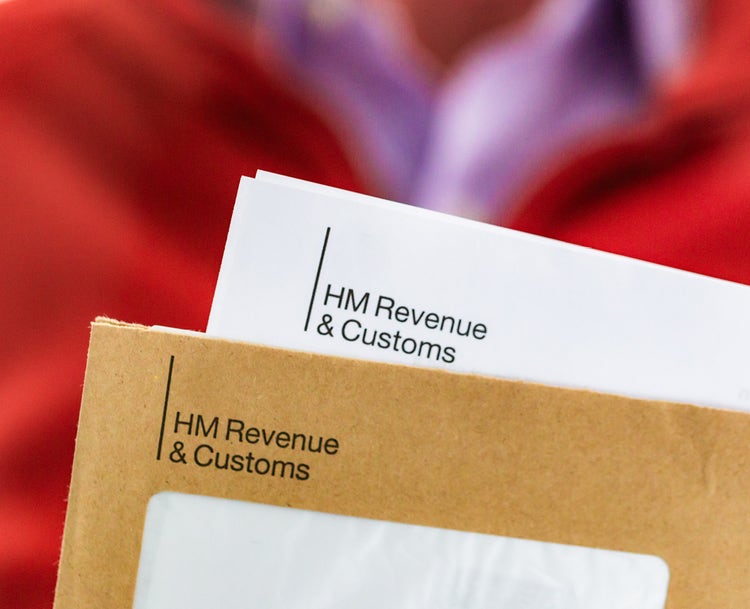
HMRC frequently utilises information at its disposal to identify potential discrepancies in a person’s tax affairs and write directly to them. These letters typically require the recipient to review their tax affairs and take any necessary action. These are known as ‘nudge letters’.
Why have I received a nudge letter from HMRC’s Campaigns and Projects team?
HMRC has access to more information than ever before, both from the UK and overseas, and the data it receives is increasingly more detailed. HMRC cross-references the information against key financial information, property and assets (through Land Registry, Council Tax and DVLA records), online social media or marketplace accounts and benefits data from the Department of Work and Pensions.
As a result of this analysis, HMRC’s Campaigns and Projects teams can identify taxpayers who could have undeclared income or gains. This may arise from a variety of sources including overseas assets or accounts, rental income and online marketplace sales.
HMRC Campaigns and Projects teams issue letters to targeted taxpayers outlining at a very high level the perceived tax risk and putting the onus on the taxpayer and their adviser to review and correct the position if necessary.
What to do if you’ve received a nudge letter from HMRC’s Campaigns and Projects team?
The response may appear simple given the letter contains recommended actions. These letters often enclose a Certificate of Tax Position, although careful consideration should be given to the best course of action and the implications of completing the certificate.
The steps below outline what you should do next:
1. Don’t bury your head in the sand
HMRC is likely to hold specific information relating to your tax affairs which has led to the letter being issued. If the letter is ignored, follow-up correspondence from HMRC could be in the form of a formal compliance check or a discovery assessment.
2. Seek immediate professional help
A specialist tax dispute resolution adviser can assist you in reviewing your tax affairs and identifying any tax irregularities. They can advise on the most appropriate response to HMRC.
3. Respond to HMRC
It is generally best practice to respond by the deadline shown in the letter or to engage with HMRC before this date to provide an update if a full response is not possible. If a disclosure is required, you should notify HMRC of your intention to make one.
How RSM can support you on receipt of a nudge letter from HMRC
- Our specialist Tax Dispute Resolution Services team consists of fully trained ex-HMRC inspectors, Chartered Tax Advisers and Chartered Accountants. Collectively, the team has several decades of experience in dealing with HMRC correspondence and disclosures.
- Our experienced team is well placed to help you review your tax affairs and correspond with HMRC on your behalf, helping to reduce the stress that can arise through ongoing engagement with HMRC.
- If a disclosure is required, the team will support you throughout the process. We calculate the liabilities owed to HMRC, mitigating them where possible and providing HMRC with the necessary explanations to ensure the process is concluded as efficiently as possible.
What to do if a disclosure is required?
In most cases where a disclosure is required, it can be made through HMRC’s Digital Disclosure Service (DDS). However, depending on the income or gains to be disclosed, there may be instances where other disclosure routes are more appropriate. A benefit of the DDS process is that it is clearly defined and provides a level of certainty on the timings.
Below, we outline the key four steps of the DDS process.
A notification is submitted to HMRC informing it of your intention to submit a disclosure. At this stage, you do not need to have computed the liabilities owed.
The notification protects your position from further HMRC action, such as a formal compliance check. HMRC will acknowledge the notification in writing.
From the date of this acknowledgement, it is expected that you will submit your disclosure to HMRC within 90 days.

The prescribed format of a disclosure via the DDS requires you to provide details of the tax liabilities in each tax year, together with a calculation of late payment interest.
You will need to consider whether a penalty should be charged on the tax liabilities. Where a penalty is chargeable, you need to calculate your exposure and explain to HMRC why the rate applied is appropriate based on the legislative framework.
Payment of the liability is expected when the disclosure is submitted to HMRC.

Following submission, HMRC will review your disclosure and may ask follow-up questions regarding:
- The background to the source of the mis-reported income and/or gains.
- How the liabilities, income and/or gains in the disclosure have been calculated.
- Why the income and/or gains were not reported correctly historically.
- Any other matters related to the disclosure or the consequences of it.
HMRC’s assessment of these factors may influence how the disclosure is treated, including the level of penalties charged on any resulting tax liabilities.
Once any further questions have been resolved, or if HMRC has no questions relating to the disclosure, it will issue a Letter of Acceptance. This formally confirms that HMRC accepts the disclosure and that payment has been received.
The Letter of Acceptance confirms conclusion of the disclosure process and provides reassurance that your tax affairs related to the disclosure have been brought up to date.

What to do if you don’t have undeclared income or gains
If you have undertaken a full review of your affairs and there no errors or omissions, then no disclosure to HMRC will be required.
However, the letter has likely been issued based on information HMRC has received, and has potentially verified, through its cross-checking process. It is therefore helpful to understand what information HMRC has and why it considered there is a risk of undeclared income or gains.
As a lack of response to HMRC could lead to a formal compliance check or to HMRC raising discovery assessments, you should consider responding to HMRC to explain why you consider your tax affairs are up to date
FAQs
Receiving any letter from HMRC can be confusing and stressful, and it often raises a number of questions. Our expert Tax Dispute Resolution Services team has compiled answers to some of the most common queries raised upon receipt of a letter from HMRC’s Campaigns and Projects teams.
If you do not respond to the letter, HMRC may follow up with formal action such as opening an enquiry or issuing a discovery assessment. Additionally, if you ignore the letter and a tax liability is subsequently found to be due, it could result in HMRC being able to charge a higher penalty.
Whilst each case is different, the average Digital Disclosure Service disclosure takes between five and seven months to conclude.
If you have received a nudge letter from HMRC, do not bury your head in the sand. Speak to our experts today for a free, confidential consultation on 020 3839 3000 or submit your enquiry on the form below.